Protein & Muscle Tissue
Scientific examination of amino acid metabolism, protein synthesis, and the relationship between dietary protein and muscle composition.
Muscle Physiology Fundamentals
Skeletal muscle is composed primarily of contractile proteins organized into sarcomeres—the fundamental contractile units. Muscle contraction occurs when myosin heads interact with actin filaments in an energy-dependent process, pulling the thin filaments and shortening the muscle.
Muscle tissue is dynamic; it undergoes constant protein turnover where existing proteins are degraded and new proteins are synthesized. The balance between protein synthesis and degradation determines net muscle protein balance and, over time, muscle mass.
Protein Synthesis and Muscle Growth
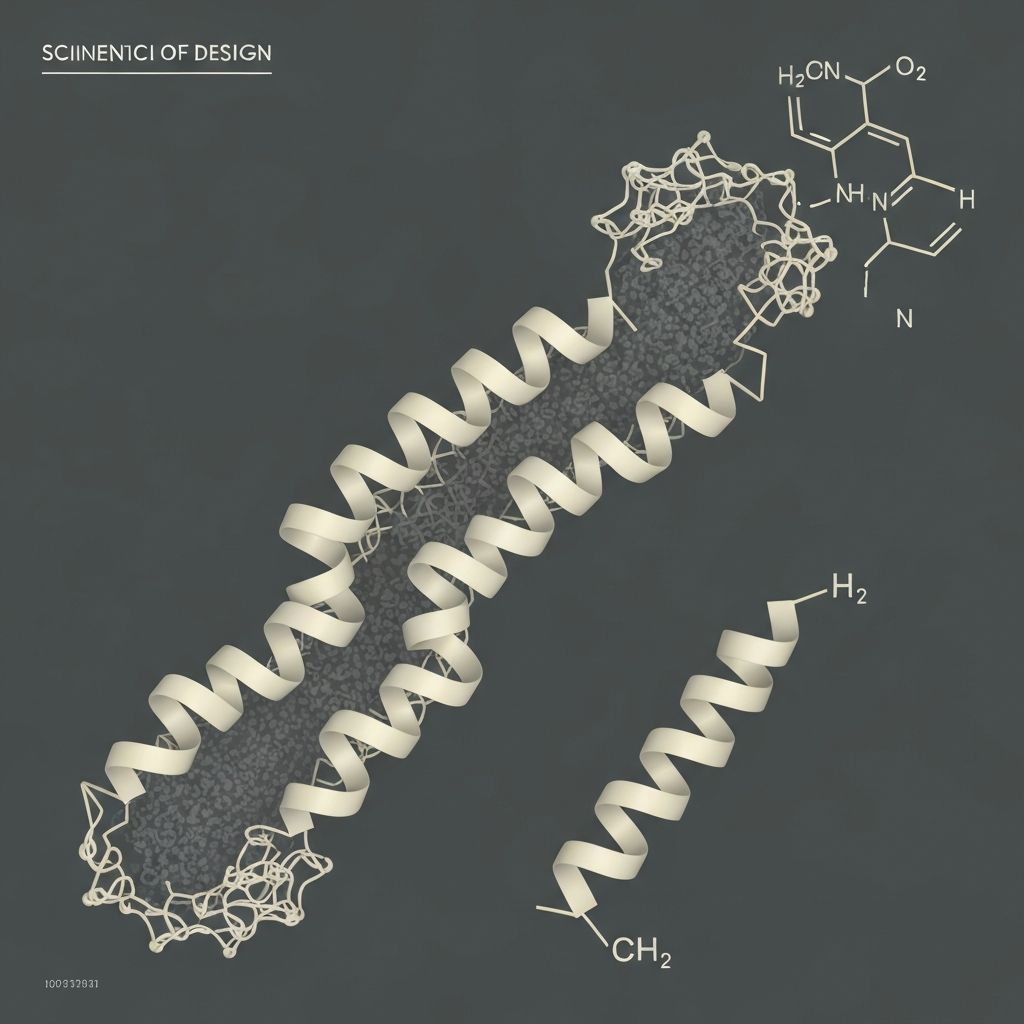
Muscle protein synthesis (MPS) is the process whereby amino acids are assembled into new protein structures. This process is regulated by mechanical signals (tension and contraction), hormonal signals (insulin, growth hormone, IGF-1), and nutrient signals (amino acid availability, particularly leucine).
Resistance exercise creates mechanical tension and microscopic muscle damage, triggering adaptive signaling that upregulates MPS. However, this upregulation is transient—lasting hours after exercise—and is blunted without adequate amino acid availability.
Amino Acids and Dietary Protein
Dietary protein is composed of 20 amino acids in varying ratios. Nine of these amino acids cannot be synthesized by the human body and must be obtained from food—these are the "essential" amino acids.
The essential amino acids are: histidine, isoleucine, leucine, lysine, methionine, phenylalanine, threonine, tryptophan, and valine.
Protein quality—the efficiency with which dietary protein supports muscle protein synthesis—is determined by its amino acid composition and digestibility. Animal-based proteins generally provide all essential amino acids in adequate ratios; plant-based proteins vary in amino acid composition and may require combination or supplementation.
Leucine, in particular, serves as a signaling molecule that activates mTOR signaling—a central pathway regulating protein synthesis. This partially explains why leucine content influences the muscle-building capacity of protein sources.
Protein, Energy Balance, and Body Composition
The relationship between dietary protein and body composition is complex and context-dependent. Protein influences body composition through several mechanisms:
- Direct support of muscle protein synthesis: Adequate protein provides the substrate for muscle maintenance and growth
- Appetite regulation: Protein's high thermic effect and satiety signaling influence overall energy intake
- Nutrient partitioning: Protein status influences whether energy surplus is preferentially stored as muscle or fat
- Metabolic adaptation: Protein intake may partially protect against metabolic adaptation during energy deficit
The magnitude of protein intake sufficient to maximize muscle protein synthesis appears to vary based on training status, age, total energy intake, and genetic factors. Current evidence suggests intake in the range of 1.6-2.2 g/kg body weight supports optimal muscle protein synthesis in trained individuals.